Resosonic Reactor Technology for Vegetable Oil Processing
Resonance-assisted degumming and neutralization for controlled liquid-liquid mass transfer.
A technical research publication on pressure-wave-driven droplet resonance, interfacial renewal, and phase-separation control in edible oil refining.
Vegetable oil refining depends on rapid contact between crude or pretreated oil and an aqueous reagent phase. During degumming, acid conditioning, water washing, and caustic neutralization, the rate and selectivity of impurity removal are governed by interfacial area, droplet size distribution, reagent residence time, and phase separation behavior.
The RESOSONIC reactor concept uses controlled longitudinal pressure waves to excite capillary oscillations in dispersed aqueous droplets within a continuous oil phase. When the forcing frequency is close to a droplet natural frequency, droplet deformation and interfacial renewal increase, which can intensify reagent transfer while limiting the uncontrolled formation of stable fine emulsions.
The technical draft links the reactor concept to established droplet oscillation theory, emulsion breakup principles, water hammer relationships, and edible oil refining practice. Reactor-specific performance values are presented as internal reported results and should be verified against defined analytical methods and plant operating conditions before use as commercial claims.
Crude vegetable oils contain triglycerides as the desired product and a complex mixture of minor constituents that must be removed or transformed before the oil can meet edible or downstream processing specifications. Important impurities include phospholipids, free fatty acids, trace metals, pigments, waxes, oxidation products, moisture, suspended solids, and volatile odor compounds.
In conventional chemical refining, degumming removes phospholipids, neutralization converts free fatty acids into soaps, washing removes residual soaps and salts, bleaching removes pigments and trace contaminants, and deodorization removes volatile components. In physical refining, the pretreatment demand is especially severe because residual phosphorus and metals can create color, stability, and fouling problems during high-temperature deodorization.
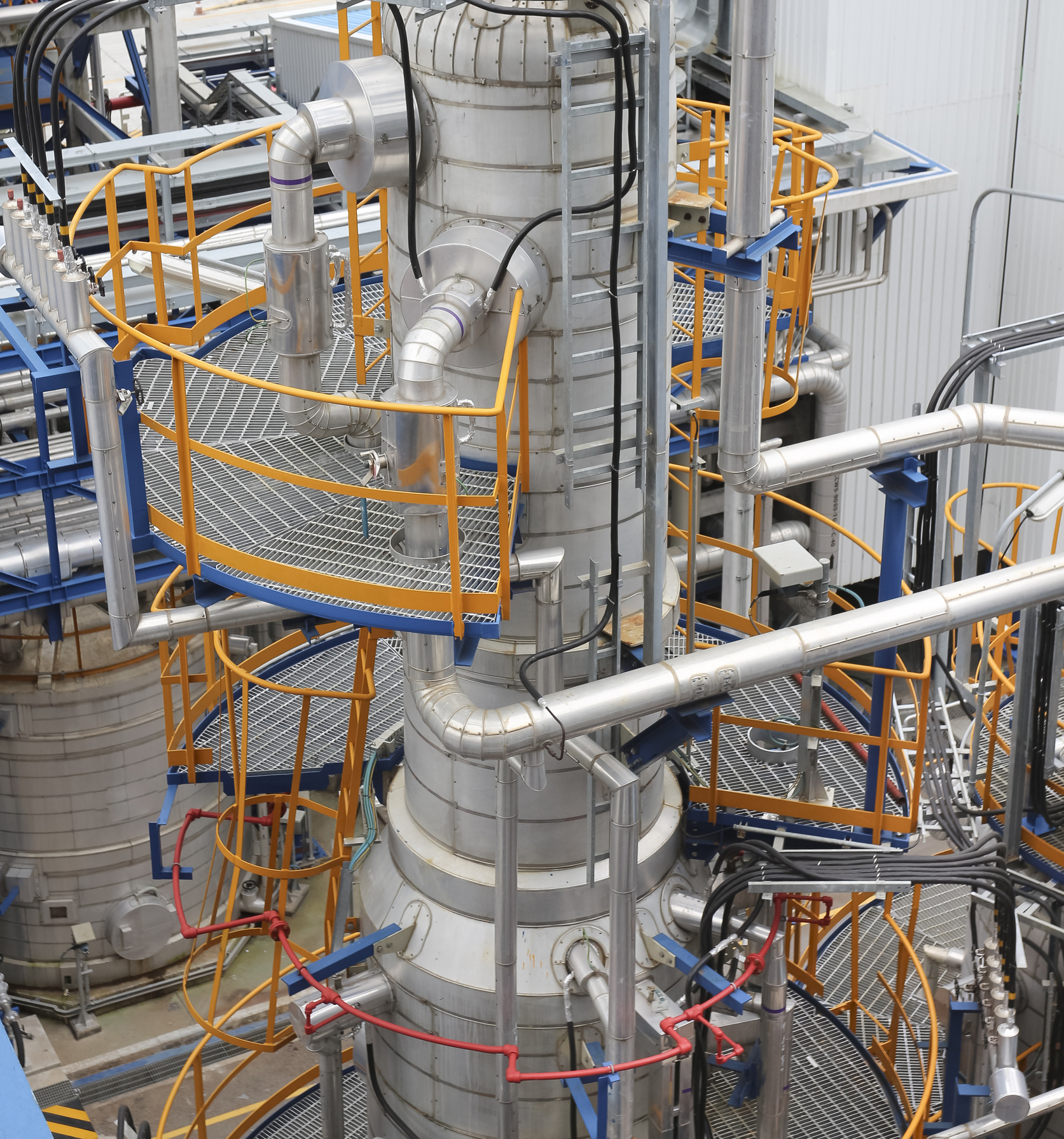
Industrial degumming and neutralization are liquid-liquid processes. An aqueous phase containing water, acid, caustic, chelating agent, or enzyme must be dispersed into a continuous oil phase, contact impurities at the oil-water interface or in the interfacial region, and then separate cleanly.
This creates a practical tradeoff. Strong agitation increases interfacial area and reaction rate, but excessive shear can form small, persistent droplets that are difficult to separate and that carry neutral oil into gums, soap stock, or wash water. A reactor that can generate interfacial renewal without producing an inseparable emulsion can therefore improve oil yield, separation reliability, and product quality.
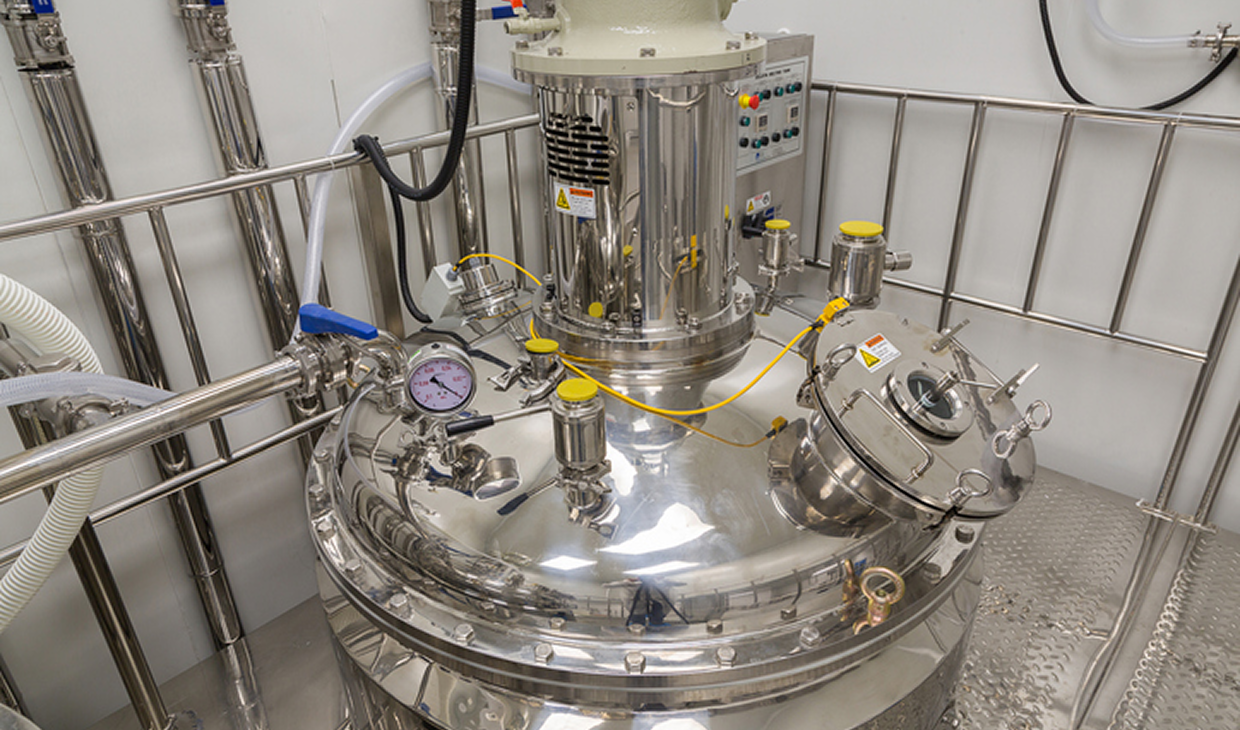
The RESOSONIC reactor technology addresses this tradeoff by using controlled pressure pulsations rather than relying only on mechanical shear. The technical draft describes a channel-based device with rotating disc valves that periodically block and open the flow, converting kinetic energy into longitudinal pressure pulses in the liquid mixture. The pressure wave frequency is designed to interact with the natural capillary oscillation frequencies of dispersed aqueous droplets. The result is a resonance-assisted mixing and reaction zone intended to increase mass transfer, improve droplet size uniformity, and reduce sensitivity to water content and flow-rate variation.
Degumming and Neutralization in Vegetable Oil Processing
Degumming removes phospholipids, often called gums or phosphatides. Hydratable phospholipids can be removed by water addition because they become insoluble in oil after hydration. Nonhydratable phospholipids are commonly calcium and magnesium salts of phosphatidic acid and phosphatidylethanolamine. They usually require acid treatment or another conditioning step to convert them into forms that can hydrate and separate.
Physical refining generally requires low phosphorus after degumming, commonly below 10 mg/kg, because high residual phosphorus can impair later refining stages. Neutralization removes free fatty acids by reaction with sodium hydroxide or another alkali. The reaction forms sodium soaps that are separated by centrifugation and then reduced further by water washing or adsorption during bleaching.
Neutralization can also remove residual phospholipids, metals, pigments, and other polar materials. However, soaps are natural emulsifiers. If the contactor generates droplets that are too fine or if wash conditions are not controlled, soap-stabilized emulsions can increase oil loss and reduce centrifuge efficiency.
Table 1. Refining Steps Relevant to Resosonic-assisted Processing
| Water Degumming | Hydrate and Remove Hydratable Phospholipids | Water | Rapid Hydration While Avoiding Stable Gum Oil Emulsions |
| ACID Conditioning | Convert Nonhydratable Phospholipids Into Hydratable Forms | Phosphoric, Citric, or Other ACID Solution | Efficient Contact With Trace Ca and Mg Phospholipid Complexes |
| Caustic Neutralization | Convert Free Fatty Acids Into Soaps | Sodium Hydroxide Solution | Complete Neutralization With Limited Neutral Oil Entrainment |
| Water Washing | Remove Soaps, Salts, and Residual Polar Impurities | Hot Wash Water | SOAP Transfer to Water Phase Followed by Clean Separation |
| Enzymatic Degumming Support | Convert Phospholipids to More Separable Forms | Aqueous Enzyme Phase | Uniform Enzyme Access Without Damaging Separation Behavior |
Capillary Resonance and Droplet Oscillation Theory
A dispersed water or alkali solution droplet in oil tends to remain spherical because interfacial tension minimizes surface area. When the surrounding liquid is subjected to periodic pressure pulsations, capillary waves can form at the interface. If the forcing frequency approaches a natural capillary oscillation frequency, droplet deformation amplitude can increase strongly.
This principle traces to Rayleigh's analysis of capillary phenomena and is commonly expressed through Rayleigh mode oscillations for small-amplitude droplet deformation.
For an inviscid spherical droplet of radius R, interfacial tension σ, internal density ρd, and external continuous phase density ρc, the natural angular frequency of mode n may be written in Rayleigh mode form:
ωn2 = n(n - 1)(n + 2)σ / R3[(n + 1)ρd + nρc] (1)
If the external phase density is neglected or is much smaller than the droplet density, Equation (1) reduces to the simplified Rayleigh expression used in many engineering estimates:
ωn2 = (σ / (ρR03))n(n+2)(n-1)
The lowest physically meaningful oscillation is mode n = 2 because n = 0 corresponds to a volume change and n = 1 corresponds to translation of the droplet center. For mode n = 2, the simplified result is:
ω22 = (8σ / (ρR03))
Equations (1) to (3) show that droplet resonance depends strongly on droplet size. Frequency scales approximately as R-3/2. Smaller droplets resonate at higher frequencies, while larger droplets resonate at lower frequencies. Interfacial tension increases the natural frequency, whereas phase density and viscosity affect inertia and damping.
In real vegetable oil systems, soaps, phospholipids, acids, caustic, temperature, and minor surface-active materials can change interfacial tension and therefore shift the resonance condition.
Effect of SOAP and Interfacial Tension
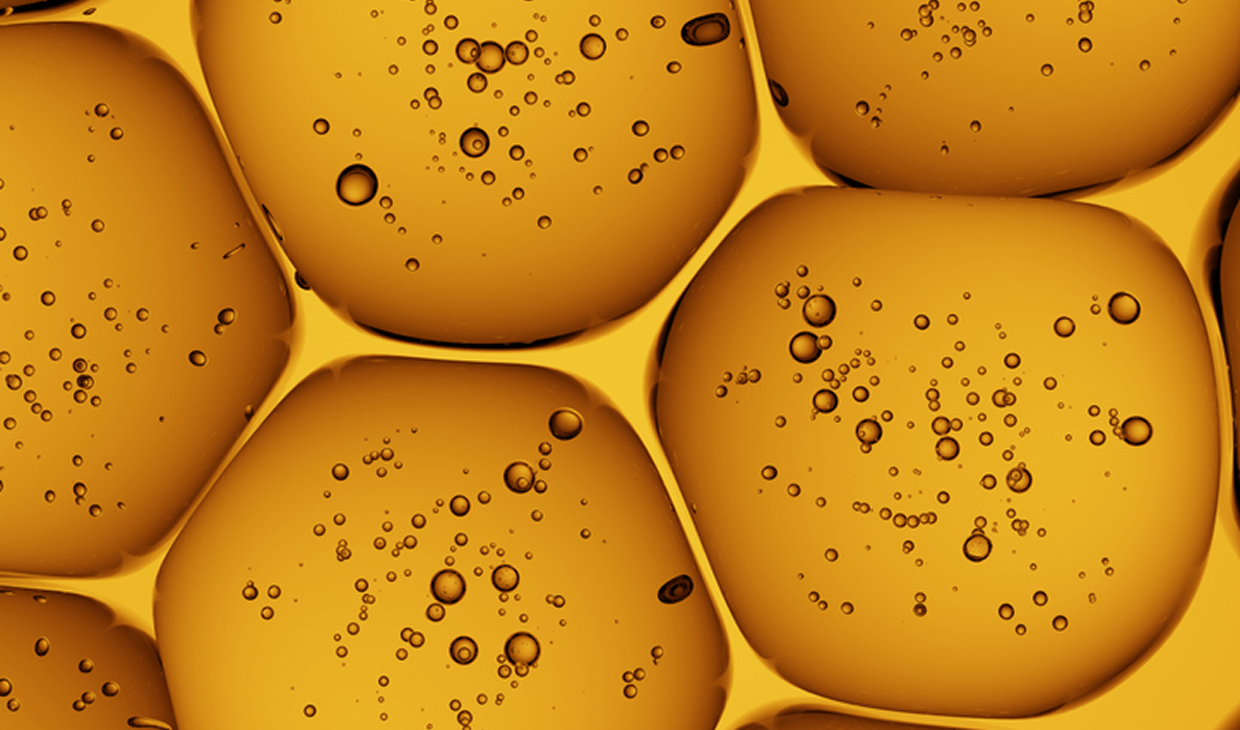
Interfacial tension is strongly influenced by surface-active impurities and reaction products. In a water and vegetable oil system containing soap as surfactant, the draft states that 80 ppm soap reduces interfacial tension to 0.27 mN/m, while 300 ppm soap reduces it to 0.23 mN/m. The decrease from 0.27 to 0.23 mN/m is approximately 14.8 percent relative to the 80 ppm condition.
Because σ appears directly in capillary oscillation and dispersion relationships, these low interfacial tension values reduce the restoring capillary force and can shift the droplet resonance window. They also help explain why soap management is critical: lower interfacial tension improves deformation and interfacial renewal, but excess soap can stabilize fine droplets and make downstream separation more difficult.
Droplet Breakup and Interfacial Renewal Under Pressure Waves
Droplet breakup occurs when external stresses deform a droplet faster or more strongly than interfacial tension can restore its spherical shape. Classical studies of drop deformation and dispersion show that breakup depends on droplet size, viscosity ratio, interfacial tension, local stress, and the time over which stress is applied.
In turbulent or mechanically agitated systems, this is often described through the balance between disruptive hydrodynamic stresses and stabilizing capillary pressure. In a resonance-assisted system, the disruptive stress is applied as a periodic pressure field that amplifies droplet oscillation when the frequency and droplet size are compatible.
The practical objective is not simply to create the smallest possible droplets. Very fine droplets create high interfacial area, but they can also increase emulsion stability, soap entrainment, centrifuge load, and oil loss. The preferred operating window produces enough deformation and interfacial renewal to accelerate reaction and extraction while still allowing droplets or hydrated gums to coalesce and separate after the contact zone. This distinction is important for edible oil refining because phase separation quality is as important as reaction completion.
Table 2. Factors Influencing Droplet Deformation, Breakup, and Separation
| Droplet Diameter | Larger droplets resonate at lower frequency and deform more easily at a given frequency. | Controls the match between reactor frequency and emulsion population. |
| Interfacial Tension | Higher interfacial tension resists deformation and increases resonance frequency. | Affected by phospholipids, soaps, acids, caustic, and temperature. |
| Continuous Phase Viscosity | Higher viscosity damps oscillation and slows coalescence. | Temperature control can reduce viscosity and improve separation. |
| Dispersed Phase Viscosity | Higher viscosity increases internal damping of oscillation. | Reagent concentration influences droplet dynamics. |
| Pressure Amplitude | Higher amplitude increases deformation and breakup probability. | Must be high enough for interfacial renewal but not so high that it creates persistent fines. |
| Forcing Frequency | Frequency near a natural droplet mode amplifies response. | Reactor channel geometry and valve timing should be tuned to the target droplet size range. |
| Residence Time Under Pulsation | More cycles increase energy transfer and probability of breakup. | Valve closure time and flow rate govern exposure. |
| Surface Active Impurities | Soaps and phospholipids can lower interfacial tension and stabilize small droplets. | Chemistry and mixing intensity must be coordinated. |
Resosonic Reactor Design and Operating Principle
The RESOSONIC reactor described in the technical draft is a channel-based pressure wave contactor. The device contains channels that are periodically opened and closed by two rotating disc valves mounted on a shaft. As the entrance and exit of a channel move from an open position to a closed position, the flowing pretreated mixture is suddenly decelerated.
Part of the kinetic energy of the moving liquid column is converted into pressure energy, creating a hydraulic pulse inside the channel. The pressure wave travels along the channel, reflects at the closed valve faces, and returns through the liquid mixture.
For a channel of length L and pressure wave speed c, the round trip period is:
T = 2L / c, f = 1 / T = c / (2L) (4)
If the channel remains closed for time t, the approximate number of wave round trips is:
N = t / T = tc / (2L) (5)
Equations (4) and (5) connect the mechanical geometry and timing of the reactor to droplet exposure. A shorter channel or higher pressure wave speed produces a higher wave frequency. Increasing closure time increases the number of oscillatory cycles experienced by droplets inside the channel.
The technical draft reports a reciprocating longitudinal pressure wave frequency range of approximately 40 to 120 kHz, consistent with the length scale needed to excite micrometer-scale droplets in oil under representative interfacial tension and density assumptions.
Pressure Transient Relationships and Dispersion Estimates
The transient pressure increase during valve closure can be treated using fluid transient theory. For rapid velocity change, the Joukowsky relationship gives an ideal pressure rise proportional to fluid density, wave speed, and velocity change:
ΔP = ρcΔV (6)
For gradual closure, where closure time is longer than the characteristic wave transit time, the pressure rise can be approximated by a rigid column relationship:
ΔP = ρLV / t (7)
Here ρ is the liquid mixture density, V is the initial channel velocity, L is the channel length, and t is the closure time. These relationships are idealized. Real reactors require correction for channel geometry, valve leakage, compressibility, two-phase microstructure, temperature, mechanical compliance, and friction. They are nevertheless useful for showing that pressure amplitude can be controlled by flow velocity, channel length, wave speed, and valve timing.
The engineering estimate for the maximum droplet size that can be dispersed by an applied frequency is given in the draft as:
dmax ≤ σ / (2ρων) (8)
In Equation (8), dmax is the maximum droplet diameter, ν is kinematic viscosity of the dispersed phase, ρ is density of the dispersed phase, and ω is angular forcing frequency. The expression indicates that increasing forcing frequency or dispersed-phase viscosity tends to reduce the size that can be sustained during dispersion, while higher interfacial tension resists breakup. For design use, this estimate should be calibrated against measured droplet size distributions in the actual oil, reagent chemistry, temperature, and flow regime.
Expected Process Benefits
The principal process benefit of resonance-assisted contact is selective intensification. Instead of applying broad mechanical shear throughout the entire flow field, the reactor attempts to transfer energy into droplet oscillation modes that directly renew interfacial area.
This can shorten the time required for hydration, acid conditioning, neutralization, and soap transfer while maintaining droplet populations that remain separable. The concept is consistent with emulsion science, where droplet size distribution and recoalescence control the final emulsion state as much as initial breakup.
The draft reports several operational advantages: lower tendency to form inseparable emulsions, lower sensitivity to water content, simpler automation across changing flow rates, effective operation with a 2 to 3 bar feed pump, low operating noise, and energy consumption below 1.0 kWh per metric ton when operating at resonant conditions.
It also reports a test on North American soybean oil containing 0.5 percent free fatty acids and 600 mg/kg phosphorus, with treated oil results below 60 mg/kg soap and below 3 mg/kg phosphorus. These values are presented as internal reported results, not independently audited specifications.
Table 3. Resosonic Operating Parameters and Their Process Significance
| Pressure Feed Pump of 2 to 3 Bar | Suggests low pumping pressure relative to many high pressure homogenizing approaches. | Measure pressure drop, flow stability, and temperature rise across production flow range. |
| Pressure Wave Frequency of 40 to 120 Khz | Compatible with resonance of micrometer scale droplets under representative assumptions. | Measure actual pressure waveform and droplet size distribution at each frequency setting. |
| Energy Consumption Below 1.0 Kwh Per Metric Ton at Resonant Operation | Indicates potential low specific energy input. | Confirm with motor power, pump power, throughput, and auxiliary load accounting. |
| SOAP Below 60 Mg/kg After Soybean Oil Processing | Indicates manageable residual soap after neutralization and washing. | Verify by AOCS or plant standard soap method with replicate samples. |
| Phosphorus Below 3 Mg/kg After Soybean Oil Processing | Supports suitability for demanding downstream refining conditions. | Verify by ICP or colorimetric phosphorus method and document feedstock variability. |
| Lower Tendency to Create Inseparable Emulsions | Could improve centrifuge separation and reduce neutral oil losses. | Quantify centrifuge discharge oil content, gum oil content, emulsion layer volume, and wash water oil carryover. |
Table 4. Qualitative Comparison of Conventional Mixing and Resonance-assisted Contacting
| Primary Energy Transfer Mechanism | Bulk shear, turbulence, and local eddies. | Longitudinal pressure waves coupled to droplet capillary oscillations. |
| Droplet Size Control | Often depends strongly on flow rate, viscosity, and mixer speed. | Designed around frequency, pressure amplitude, closure time, and channel geometry. |
| Risk of Stable Emulsion Formation | Can increase if excessive shear produces very fine droplets in the presence of soaps or phospholipids. | Intended to promote interfacial renewal while limiting persistent fine emulsion formation. |
| Automation | May require frequent adjustment when flow rate, feed quality, or water content changes. | Draft claims reduced need for constant adjustment across flow variation. |
| Separation Compatibility | Can overload centrifuges if fines and soap-stabilized droplets accumulate. | Aims to maintain droplet populations that remain separable after reaction. |
| Scale Up Focus | Impeller speed, pressure drop, residence time, and shear distribution. | Wave frequency, valve timing, channel length, waveform, and droplet resonance window. |
Implementation and Validation Considerations
A resonance-assisted reactor should be implemented as part of a complete refining system rather than as an isolated mixer. Feedstock quality, moisture, temperature, free fatty acid level, phosphorus speciation, calcium and magnesium content, reagent concentration, residence time, separator capacity, and wash water quality all influence final performance.
For soybean oil, phospholipid composition and divalent metals are especially important because they influence both degumming efficiency and oil loss.
Conclusion
RESOSONIC reactor technology applies a physically coherent principle to vegetable oil processing: controlled pressure waves can couple with capillary oscillations of aqueous droplets dispersed in oil. The theoretical framework explains why droplet size, interfacial tension, viscosity, pressure amplitude, frequency, and residence time are central design variables.
In degumming and neutralization, this mechanism can potentially intensify reagent contact and mass transfer without relying solely on high mechanical shear. The practical value of the technology lies in balancing three outcomes that are often in tension: rapid reaction, controlled droplet size, and clean phase separation.